
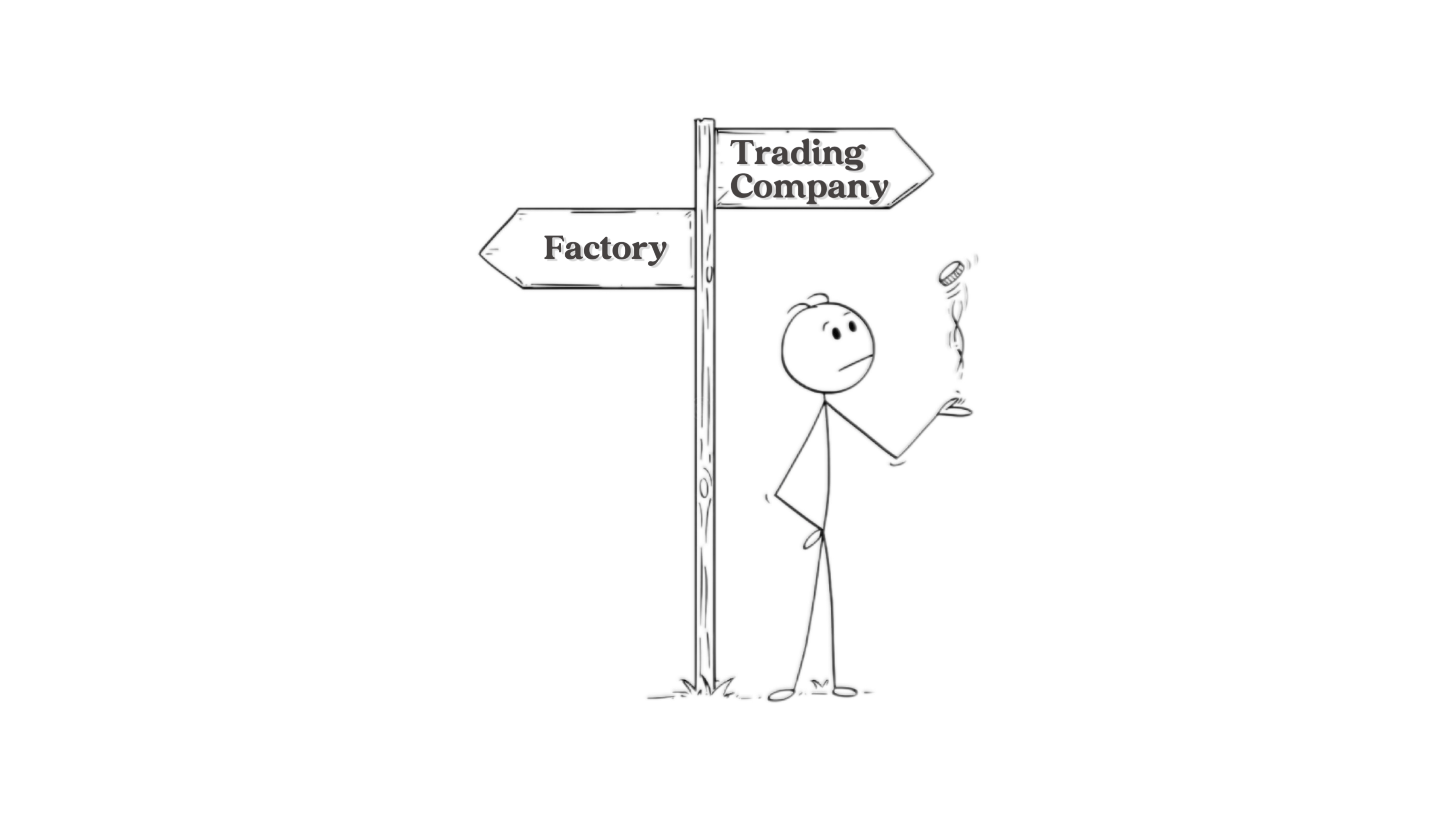
When sourcing shoes, many brands eventually ask the same questions:
· Is it better to work directly with a shoe factory?
· Will a factory always offer a lower price than a trading company?
· What does a footwear trading company actually do?
· If I already have a design, why would I need a trading company?
· For an OEM or ODM project, which option makes more sense?
These are reasonable questions. In footwear, however, the answer is not simply about choosing between a factory and a trading company.
A factory is mainly responsible for manufacturing. A professional footwear trading company can take on a broader role, coordinating factories, suppliers, product development, quality control, production, and shipment.
The real difference is often how much of the sourcing and production work your team has to manage yourself.
Trading Company vs Factory: What's The Difference?
What Does a Shoe Factory Do?
A shoe factory's main role is manufacturing. Once the product specifications, materials, samples, and production requirements are confirmed, the factory focuses on producing the shoes according to those requirements.
Factories also tend to develop strengths in particular product categories, constructions, materials, or production volumes. For example, a factory with strong experience in women's sandals may not necessarily be the best fit for structured loafers or fashion heels.
That is why choosing a factory based only on its price or general product range can be risky.
What Does a Footwear Trading Company Do?
A footwear trading company is a sourcing and production partner that coordinates factories, suppliers, product development, quality control, and other parts of the manufacturing process on behalf of a brand.
Depending on the project, this can include:
· Finding suitable manufacturing resources
· Coordinating materials and suppliers
· Supporting product development and sampling
· Following up on production
· Managing quality control
· Coordinating logistics and shipment
· Keeping communication between the brand and suppliers on track
# In simple terms:
A factory focuses on making the shoes. A professional trading company helps coordinate the resources and processes needed to get the right shoes made and delivered.
The value is not simply in adding another layer between the brand and the factory. A good trading partner should make sourcing easier to manage and reduce the work and risk that the brand would otherwise have to handle itself.
Is Buying Directly From A Factory Always Cheaper?
Not necessarily. This is one of the most common questions in footwear sourcing.
A direct factory quotation may look lower because there is no trading company involved. But the unit price is only one part of the total cost of a footwear project. Other costs can appear when a project involves:
· Repeated sample revisions
· Material sourcing problems
· Production defects
· Miscommunication
· Rework
· Production or shipment delays
For example, saving a small amount on the factory price may not be worthwhile if production problems later require additional samples, rework, or significant follow-up from your own team.
Unit Price Is Not the Same as Total Project Cost. When evaluating a footwear supplier, it is worth asking: Can this supplier make the product correctly, communicate clearly, maintain the required quality, and deliver according to the agreed schedule?
For many brands, these factors can matter just as much as the initial quotation. This is particularly relevant for companies sourcing overseas without their own local sourcing team.
Why Supply Chain Integration Matters In Footwear?
A shoe may look like one finished product, but its production can involve several suppliers. Depending on the construction, a project may require upper materials, outsoles, insoles, hardware, packaging, and different manufacturing resources.
The challenge is not simply finding each supplier. It is making sure the different parts of the project follow the same product requirements and timeline.
A professional trading company can act as the main point of contact and coordinate these different resources on behalf of the brand. For an overseas buyer, this can reduce the amount of day-to-day communication and follow-up required.
How This Works At SINGULAR
At SINGULAR, we work with a network of manufacturing partners and suppliers rather than relying on one production facility for every type of footwear. This gives us more flexibility when evaluating a project. We can consider the product category, construction, materials, order requirements, and development needs before coordinating suitable production resources.
The goal is not simply to find a factory. It is to find the right production solution for the product.
Why The Right Factory Matters More Than The Biggest Factory?
There is no single shoe factory that is best at everything. Different factories develop different strengths over time. Some may have more experience with women's sandals, fashion heels, loafers, casual footwear, sneakers, or particular construction methods.
Production capacity matters too. A factory that is a good fit for a large seasonal order may not be the best choice for a smaller development-focused project.
Having access to multiple factory resources gives brands more flexibility when product requirements change. Instead of trying to find one factory capable of producing every type of shoe, a sourcing partner can evaluate the product first and then look for manufacturing resources that match it.
For brands developing several footwear categories, this can be a much more practical approach.
Quality Control Is More Than A Final Inspection
Quality control does not start when the finished shoes are ready to ship.
Many quality issues can be traced back to earlier stages of development or production. For example, the wrong material may be used, a construction detail may differ from the approved sample, or production may not follow the agreed specifications. If these problems are only discovered at the end, correcting them can be much more difficult.
A professional sourcing partner can therefore monitor quality at different stages of the project:
· Material Checks: Making sure production materials correspond with the approved requirements.
· Sample and Specification Checks: Using approved samples and product specifications as references during production.
· In-Line Production Checks: Identifying production problems before the entire order is completed.
· Final Inspection: Checking finished shoes against the agreed quality requirements before shipment.
The purpose is not simply to find defective shoes at the end. It is to identify problems early enough that they can still be corrected.
Project Management Is A Big Part Of Footwear Sourcing
A footwear project can involve much more coordination than it appears from the outside. Even after the design is ready, the project may still involve tech pack reviews, material approvals, sample revisions, size sets, production scheduling, packaging confirmation, and shipment coordination.
For brands with an experienced sourcing team, managing these steps internally may be straightforward. For smaller brands or companies sourcing overseas, it can become a significant workload.
A professional trading company can take on much of this coordination and act as the link between the brand, factories, suppliers, and logistics partners.
At SINGULAR, project management runs throughout the development and production process. Our team follows projects from the early development stage through sampling, production, quality control, and shipment, helping keep information and decisions moving between the different parties involved.
What Changes Between OEM And ODM Footwear Projects?
The role of a sourcing partner can also vary depending on whether the project is OEM or ODM.
OEM Footwear Projects
In an OEM project, the brand generally starts with its own design, specifications, or product requirements.
But having a finished design does not automatically mean the product is ready for mass production. The challenge is translating the brand's product requirements into a shoe that can be produced consistently. The production side still needs to consider materials, construction, manufacturing feasibility, sampling, quality requirements, and production costs.
A suitable manufacturing partner can help brands identify potential production issues during development rather than waiting until mass production.
ODM Footwear Projects
ODM projects usually involve more development support. Depending on the project, a brand may need help with product development, material selection, construction suggestions, prototype development, design adjustments, or production feasibility.
At SINGULAR, our team supports brands through product development and sampling, helping move ideas from an initial concept toward a production-ready product. For suitable projects, we can also support fast prototype development so brands can review and adjust products earlier in the development process.
So, Should You Work With A Factory Or A Trading Company?
There is no universal answer.
Working Directly With A Factory Can Make Sense If:
· You already have reliable factory relationships
· You have an experienced sourcing team
· You can manage suppliers and production locally
· You have your own quality control process
· Your team can handle production follow-up
A Professional Trading Company May Be More Useful If You Need:
· Access to multiple factory resources
· Help finding the right production partner
· Supply chain coordination
· Product development and sampling support
· Quality control management
· Production follow-up
· One team coordinating the project from development to shipment
The important point is that a trading company should provide more than access to a factory. It should make the overall sourcing process easier, clearer, and more manageable for the brand.
What Should You Look For In A Footwear Trading Company?
If you are considering working with a trading company, price should not be the only thing you compare. Here are a few practical questions worth asking:
1. Can They Explain How Your Product Will Be Made?
A good partner should understand the construction, materials, development requirements, and potential production issues behind your design.
2. Do They Have More Than One Production Resource?
Multiple factory resources can provide greater flexibility when different products require different manufacturing capabilities.
3. How Do They Manage Quality?
Ask when and how quality is checked, not just whether they offer a "QC service."
4. Who Will Manage the Project?
Find out who will follow up on samples, approvals, production, and shipment. A clear point of contact can make a big difference when working across countries and time zones.
5. Can They Support Product Development?
For brands developing new collections, sampling and development support can be just as important as production capacity.
These questions often tell you more about a supplier than simply comparing two factory quotations.
How SINGULAR Approaches Footwear Sourcing?
At SINGULAR, we see our role as more than connecting a brand with a factory. We support footwear projects through a combination of:
· Supply chain integration
· Multiple manufacturing resources
· Product development and sampling
· Quality control management
· Production follow-up
· Project coordination
· OEM and ODM support
Our development team works with brands during the early stages of a project, while our sourcing and production resources help move approved products into manufacturing.
The goal is straightforward: make footwear sourcing easier for the brand while keeping product requirements, quality, production, and timelines connected.
Final Thoughts: The Value Is More Than the Factory Price
The question is not simply:"Should I buy from a factory or a trading company?"
A better question is:"Who can help me manage this footwear project effectively from development to delivery?"
If your team already has strong factory relationships, local sourcing resources, and the experience to manage production independently, working directly with factories may be a practical choice.
But if you need help coordinating factories, suppliers, product development, quality control, and production, a professional footwear trading company can provide value beyond the factory quotation.
In the end, the value of a good trading partner is not in being a middleman. It is in making a complicated sourcing process easier to manage and helping brands reduce the problems that can happen along the way.
Looking for a Footwear OEM or ODM Partner?
If you are developing a new footwear collection or looking for support with sourcing, product development, production, and quality control, Singular can help coordinate the process from development to shipment.
Talk to our team about your next footwear project.