
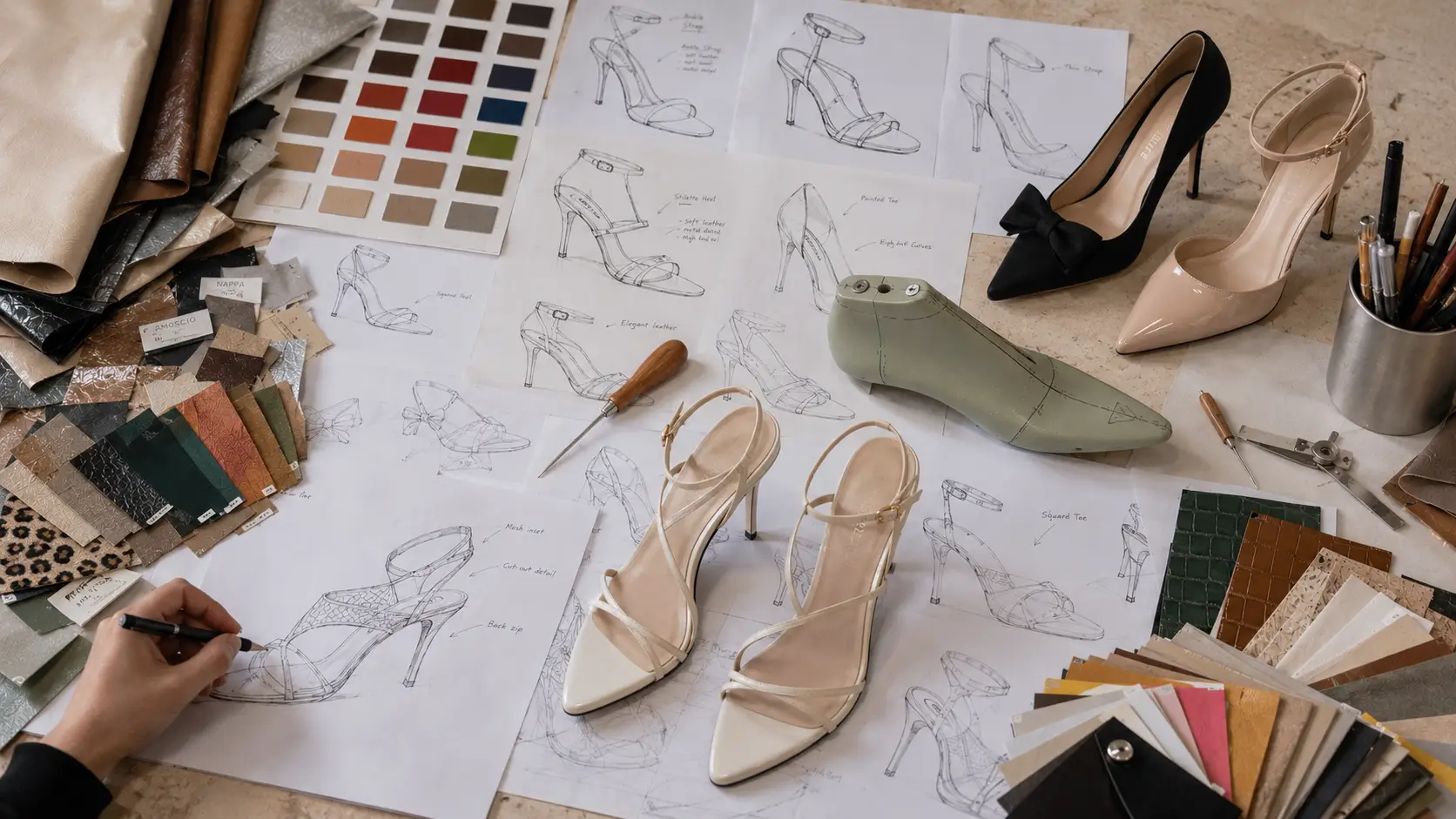
Introduction
A successful shoe is developed long before mass production begins.
Before a style reaches the production line, it usually goes through several rounds of sampling. This is where an idea becomes a physical product that can be reviewed, worn, tested, and improved. It is also where many potential problems—such as fit issues, unsuitable materials, or construction difficulties—can be identified before they turn into costly production mistakes.
For footwear brands, understanding the sampling process makes it easier to plan development timelines, communicate with suppliers, and know what needs to be approved before moving forward.
This guide explains how shoe sampling works, what the main sample stages are, and what brands should pay attention to before committing to mass production.
What is shoe sampling?
Shoe sampling is the footwear development process of creating and reviewing physical samples before mass production. It allows brands and manufacturers to evaluate design, fit, materials, comfort, construction, and production feasibility before committing to a bulk order.
Why Shoe Sampling Matters?
Even the most detailed tech pack cannot show everything about how a shoe will look or perform in real life. A material may look different once it is shaped around a last. A construction detail that works well on paper may create problems during assembly. A shoe with the right appearance may still need adjustments to improve fit or comfort.
Sampling gives brands the opportunity to discover these issues while changes are still manageable. More importantly, the sampling stage connects the design idea with the reality of manufacturing. It helps confirm not only whether the shoe looks right, but whether it can be produced consistently at the expected quality and price level.
In our experience, solving a problem during development is almost always easier than trying to correct it after bulk production has started.
The Main Types of Shoe Samples
Sample terminology can vary between brands and manufacturers, so it is always important to agree on what each sample represents and what needs to be approved at that stage.
That said, most footwear development projects follow a similar progression:
Prototype Sample
The prototype is usually the first physical version of a shoe. It gives the brand the first opportunity to evaluate the overall silhouette, proportions, basic construction, and design feasibility.
The first prototype is rarely perfect—and that is completely normal. Its purpose is to reveal what works, what does not, and what needs to be refined before further development.
Development Sample
Once the initial concept has been reviewed, development samples are used to refine the product in more detail.
This may involve adjusting materials, construction methods, components, fit, or other technical details. Depending on the complexity of the style, several rounds of development may be needed before the product is ready for final approval.
This is often where clear communication has the biggest impact. Specific and well-organized feedback helps the development team understand what needs to change and reduces unnecessary back-and-forth.
Confirmation Sample
A confirmation sample represents the version that both the brand and manufacturer have agreed is ready to move forward.
Depending on the project, it may also be used for buyer presentations, sales meetings, photography, or internal approval. By this stage, major design decisions should normally be settled, as significant changes can affect the production timeline and cost.
Pre-Production Sample (PPS)
The pre-production sample is one of the final checkpoints before bulk manufacturing begins.
It should reflect the actual materials, components, construction methods, and workmanship planned for production. This allows the brand to confirm that the approved product can be reproduced under real production conditions.
Once approved, the PPS becomes an important reference for the production and quality teams during bulk manufacturing.
How the Shoe Sampling Process Works
1. Start With a Clear Product Brief
Every footwear project needs a clear starting point. A brand may provide design sketches, reference images, a tech pack, material preferences, target pricing, size requirements, or branding details. The more clearly the key requirements are communicated, the easier it is to avoid unnecessary revisions later.
If you're preparing your first design for development, a clear footwear tech pack can help reduce misunderstandings and make the sampling process more efficient. For new brands or ODM projects, an experienced development team can help identify missing details and suggest practical solutions based on the intended product and target market.
The goal at this stage is simple: make sure everyone understands what is being developed before sample work begins.
2. Select Materials With Both Design and Production in Mind
Material selection affects much more than the appearance of a shoe. The upper, lining, insole, outsole, and decorative components can all influence comfort, durability, cost, and production consistency. A material that looks ideal for a design may not always be the most practical option once wear performance or manufacturing requirements are considered.
This is why material discussions should happen early in development. Sometimes an alternative can achieve a similar look while offering better durability, availability, or production stability.
When reviewing materials, brands should consider not only whether they like the look and feel, but also whether the material is suitable for how the shoe will be constructed and worn.
3. Develop the Pattern and Construction
Pattern making is one of the technical foundations of shoe development.
Patterns determine how different parts of the shoe are shaped, cut, and assembled. Small adjustments to dimensions, stitching positions, or component shapes can affect both the appearance and fit of the finished product.
This is one reason footwear development is more than simply reproducing a reference image. A shoe may look straightforward from the outside while requiring careful development to achieve the intended shape, fit, and production consistency.
4. Build and Review the First Prototype
Once the materials and patterns are prepared, the first prototype can be made. This is usually the first time the brand can evaluate the design as a real product. Feedback may involve the toe shape, proportions, material appearance, stitching details, color combinations, or logo placement.
It is helpful to treat the first prototype as a development tool rather than expecting it to be production-ready. The more specific the feedback, the easier it is to make meaningful improvements in the next round.
When possible, reference images or marked-up photos can also help clarify feedback and reduce misunderstandings between the brand and development team.
5. Check Fit, Comfort, and Wearability
A shoe that looks right still needs to work on the foot. Once the overall design is moving in the right direction, the product should be evaluated for fit, comfort, and functionality.
Depending on the shoe category, this may include checking the length and width, heel support, cushioning, flexibility, and potential pressure points. Fit issues are best identified early because later changes can affect other parts of the design or construction.
Brands should also consider who the shoe is designed for. Fit expectations may differ depending on the target customer and market, so defining the intended wearer and size standard early can help prevent unnecessary adjustments later.
6. Revise the Sample
Revisions are a normal part of footwear development. A sample may need to change because of fit, materials, construction, durability, cost, or simply because the physical product does not match the original design expectation.
Several rounds of development do not necessarily mean something has gone wrong. In many cases, revisions are part of turning a good idea into a product that works in the real world.
What matters is that each round has a clear purpose. Keeping feedback organized and confirming the most important changes before the next sample is made can save time and prevent the same issues from being revisited repeatedly.
7. Confirm the Final Product Before Production Planning
Once the main design, materials, construction, and fit have been agreed upon, the product can move toward final confirmation.
Before giving approval, it is worth reviewing the complete shoe rather than focusing only on the latest change. After several rounds of development, previously discussed details can sometimes be overlooked.
A final approval should mean that the key product requirements are clear enough for the factory to begin preparing for production.
8. Review the Pre-Production Sample Before Bulk Production
Before bulk production starts, the factory produces a PPS based on the actual production plan.
This stage is not simply a formality. It is the final opportunity to check whether the materials, construction, workmanship, and overall product standard match what was agreed during development.
Once production begins, changes become more difficult and expensive. A careful PPS review helps reduce the risk of misunderstandings between the approved sample and the bulk production team.
Why Shoe Samples Often Need Multiple Revisions?
One of the most common misconceptions among first-time footwear brands is that an experienced factory should be able to produce the perfect shoe from the first sample.
In reality, footwear development involves many variables that only become clear once the product is physically made and tested. A material may behave differently than expected. A small adjustment to the last may improve the fit but affect the overall proportions. A construction method that looks good on a sample may need to be refined to achieve consistent results in production.
That is why revisions should be viewed as part of the development process rather than a sign of failure. The goal is not to go through as many sample rounds as possible. It is to make sure each round brings the product closer to a clear, well-tested, and production-ready result.
How Long Does Shoe Sampling Take?
Sampling timelines vary depending on the complexity of the design, material availability, the number of revisions, and how quickly decisions can be made. As a general reference, a first prototype may take one to three weeks, while the complete development process can take several weeks or longer when multiple revisions or special materials are involved.
There is no single timeline that applies to every shoe. A straightforward style using readily available materials may move much faster than a technically complex design requiring custom components.
In practice, communication efficiency is often just as important as manufacturing speed. When feedback is clear and decisions are made promptly, unnecessary delays can usually be avoided. For this reason, it is better to allow enough time for proper development than to rush through the sampling stage. A well-developed sample can make the later stages of production much smoother.
Common Challenges During Shoe Development
Even experienced brands encounter challenges during sampling. Materials may become unavailable, colors may vary between batches, fit adjustments may be needed, or a construction detail may prove difficult to reproduce consistently at the required price level.
This is exactly why sampling matters. It gives both the brand and manufacturer a chance to identify potential risks before they affect a full production order.
A good development partner should not simply follow instructions and wait for problems to appear. They should be able to identify potential production concerns early and discuss practical alternatives when needed.
Understanding why mass production can differ from an approved sample can also help brands set more realistic expectations before placing a bulk order.
FAQ
Q: How many samples are usually needed before shoe production?
A: The number of samples depends on the complexity of the design and how much refinement is needed. A straightforward style may require only a few rounds, while a new or technically complex design may need several development samples before final approval.
Q: What is the difference between a prototype and a pre-production sample?
A: A prototype is an early version used to evaluate the design and identify areas for improvement. A pre-production sample is made closer to the actual production conditions and is used to confirm the final product standard before bulk manufacturing begins.
Q: Can shoe designs still be changed after the sample is approved?
A: Changes are possible, but they may affect material sourcing, production timelines, and costs. Major changes are best completed during the development stage before production preparation begins.
Q: What should a footwear brand check before approving a PPS?
A: Brands should review the overall appearance, materials, colors, construction, fit, workmanship, and any agreed specifications to make sure the sample reflects the standard expected for bulk production.
Final Thoughts
Shoe sampling is where a footwear idea starts becoming a real product. It gives brands the opportunity to evaluate design, fit, materials, comfort, and manufacturing feasibility before committing to mass production. More importantly, it creates a process for solving problems while changes are still manageable.
The goal is not to rush the first sample or minimize the number of development rounds at all costs. The goal is to reach a product that is clearly defined, properly evaluated, and ready to be reproduced consistently in bulk.
Whether you are developing your first footwear collection or refining an existing style, working closely with an experienced development team can make the process more predictable and help reduce avoidable production risks.
At SINGULAR, we support footwear brands throughout the development process—from early product discussions and sample development to production coordination and quality control. If you are planning a new footwear project, feel free to talk to our team about the practical requirements before moving into sampling or production.