
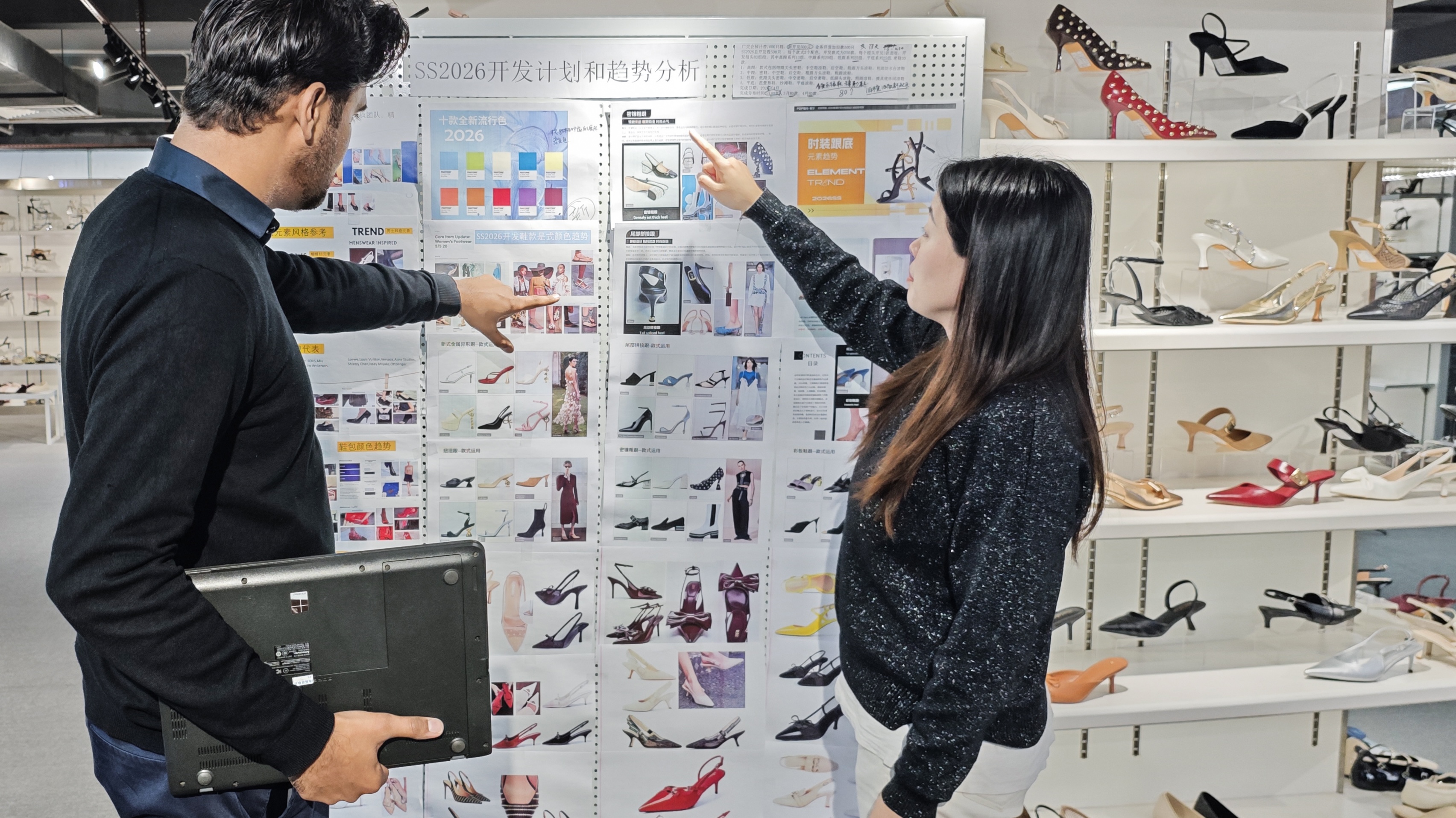
What are the key women's footwear color trends for 2026?
The key women's footwear color trends for 2026 include soft natural tones, bold statement colors, metallic finishes, and rich earth-inspired shades. For footwear brands, however, identifying a trend is only the starting point. The real challenge is deciding which colors fit the target customer, product category, materials, and market—and turning them into products people actually want to buy.
Introduction
Color is often one of the first things customers notice about a pair of shoes. Before looking closely at the construction or materials, they are already making a quick judgment: Does this fit my style? Can I wear it with what I already own? Does it feel current?
For footwear brands, color decisions carry more weight than that. They affect how a collection is positioned, how individual styles work together, and how much commercial risk a brand is taking.
This is where trend research can sometimes be misleading. A color may look great on a runway, in a campaign, or on social media, but that does not automatically mean it will work as a commercial footwear product.
For brands developing their 2026 collections, the more useful question is not just “What color is trending?” , It is “Where does this color make sense in our collection, and how can we make it work for our customers?”.
Answering that question is part of a wider footwear product development process, where design ideas need to be evaluated alongside materials, construction, target pricing, and production feasibility.
Key Women's Footwear Color Trends for 2026
Fashion trends rarely move into commercial footwear exactly as they appear on the runway. Designers and product developers need to adapt them based on the customer, shoe category, materials, and price positioning.
For 2026, four color directions are particularly relevant to women's footwear:
1. Soft Natural Tones: A Strong Commercial Foundation
Warm beige, oatmeal, sand, taupe, and soft brown continue to be reliable choices for women's footwear.
These shades work especially well for ballet flats, loafers, minimalist sandals, and everyday leather shoes because they are easy to wear and easy to integrate into an existing wardrobe.
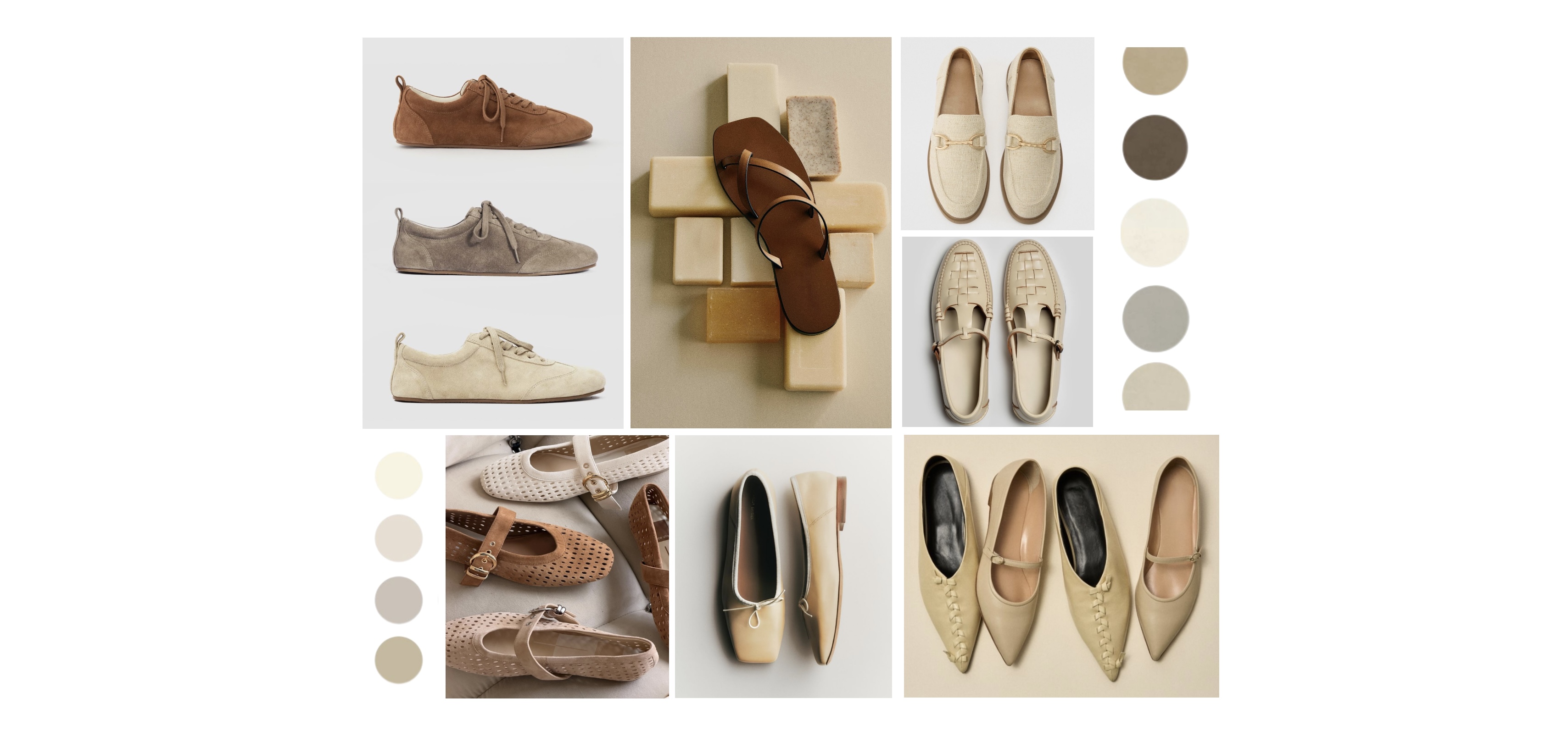
Their commercial advantage is versatility. Compared with highly seasonal colors, natural tones generally have a longer selling window and appeal to a broader customer base. The material also matters: a soft brown suede and a smooth beige leather may sit within the same color family but create very different product personalities.
For many brands, these shades are a good place to build the core of a collection, with more seasonal colors added around them.
2. Bold Statement Colors: Best Used with a Clear Purpose
Stronger colors such as cherry red, cobalt blue, emerald green, and vibrant orange can bring energy to a footwear collection and create a stronger visual identity.
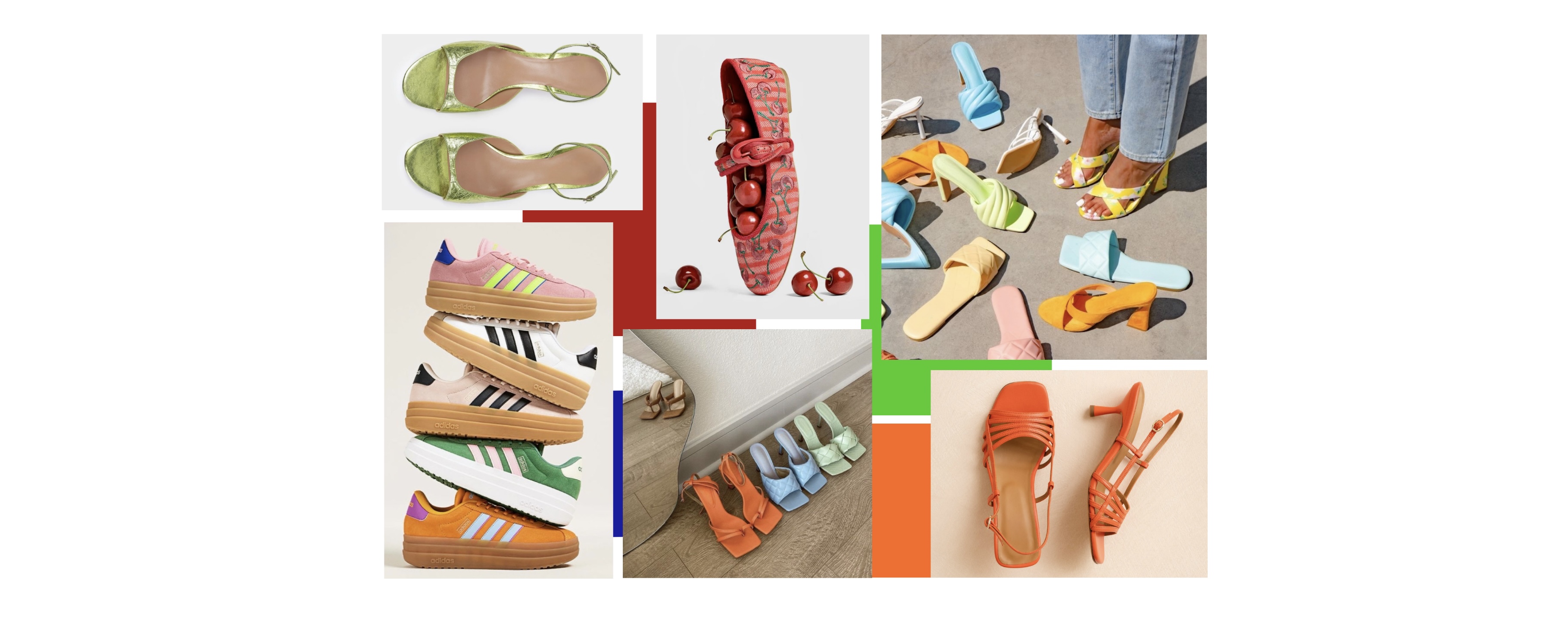
But there is an important difference between a color that attracts attention and one that customers are willing to wear repeatedly.
That does not mean bold colors should be avoided. In many cases, they work particularly well as seasonal highlights, fashion-led styles, or limited color options alongside more wearable core shades.
A bright red ballet flat, for example, may become a memorable statement piece without requiring the entire collection to move away from neutral colors. Using bold colors selectively gives a brand room to respond to fashion trends while keeping the overall collection commercially balanced.
3. Metallic Finishes: Moving Beyond Occasion Footwear
Metallic finishes are increasingly appearing in everyday fashion rather than being reserved only for evening or party shoes. Silver, champagne gold, metallic grey, and softer brushed effects can work across sandals, ballet flats, loafers, and selected sneaker styles.
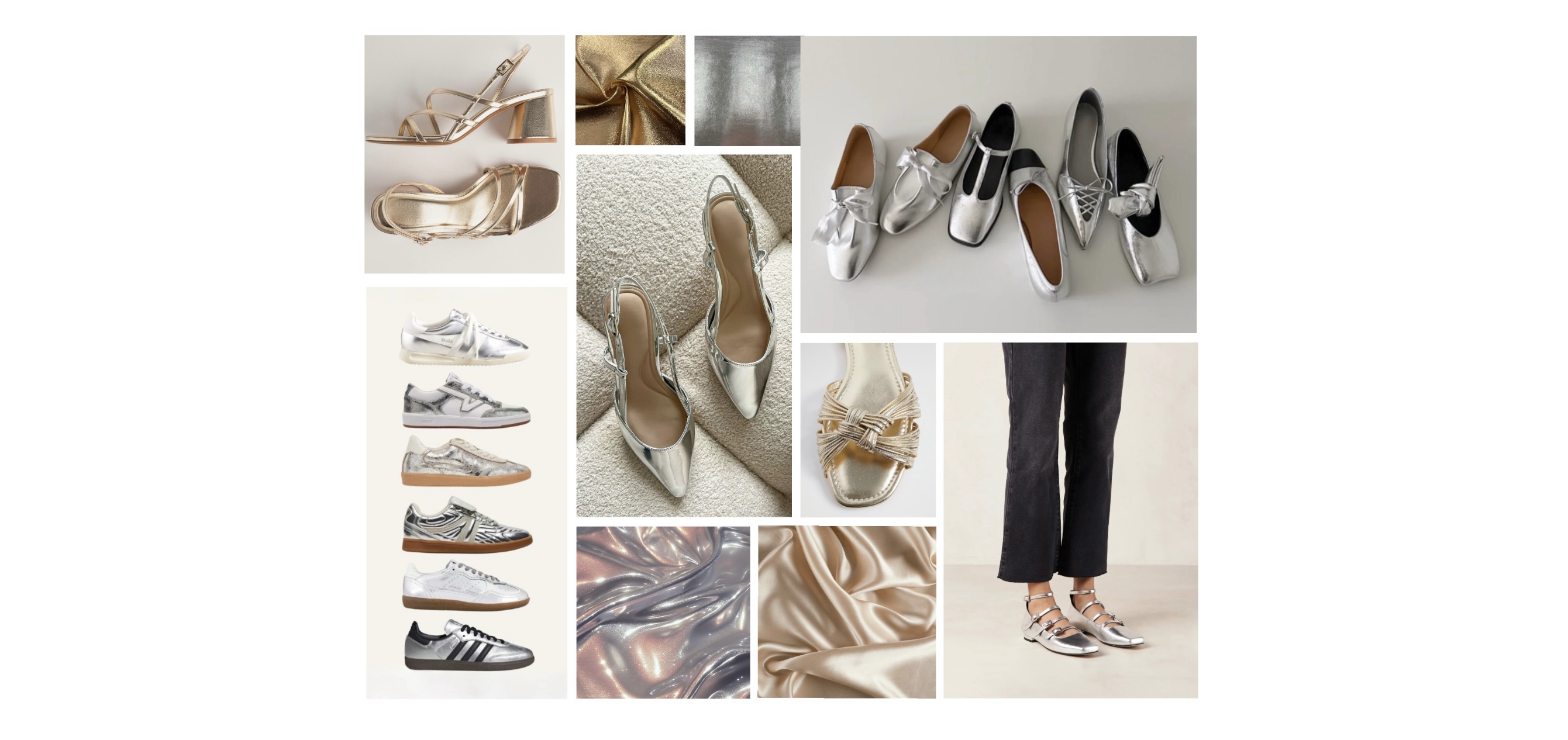
The development challenge is that metallic effects are highly material-dependent. A finish that looks refined on leather may look completely different on PU or microfiber. The level of shine, surface texture, flexibility, and durability all need to be considered during sampling.
For this reason, metallic footwear is a good example of why a trend board is never enough. The finished sample is what tells you whether the color and material combination actually works on the shoe.
4. Rich Earth-Inspired Shades: Adding Warmth and Depth
Olive green, clay, terracotta, chocolate brown, and natural tan offer an alternative to basic neutrals while remaining relatively easy to wear.
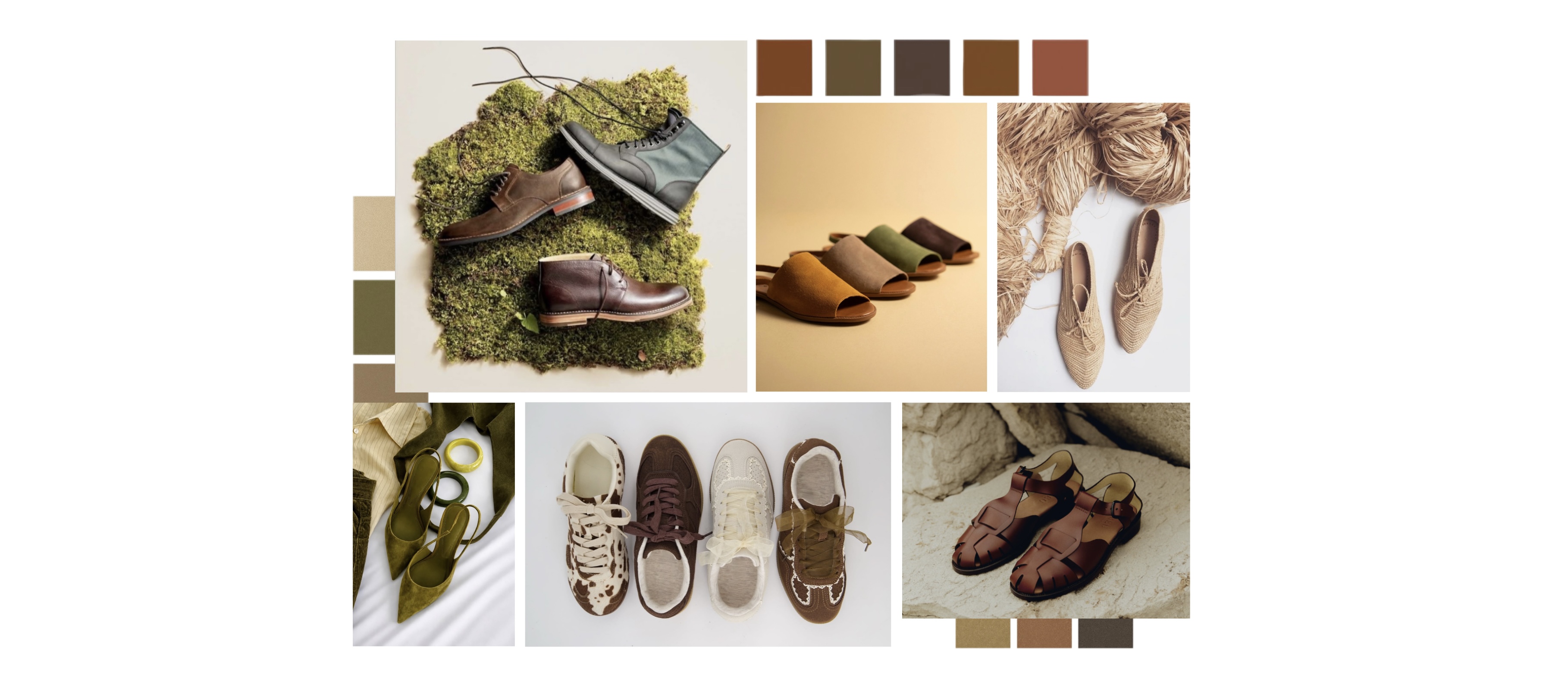
These shades work well with textured materials, natural-looking finishes, and collections that emphasize craftsmanship or relaxed everyday styling. They can also complement recycled or natural materials when the overall product story is built around those choices.
From a commercial perspective, earth-inspired shades can be useful for brands looking to add more depth to a neutral palette without taking the same level of risk as a highly saturated seasonal color.
Turning a Trend Color into a Product Customers Will Buy
Once a color direction has been identified, the next step is deciding whether it belongs in the collection.
Start with the Customer, Not the Color
The same color can perform very differently depending on who the product is designed for.
A fashion-focused brand may have more room to experiment with strong seasonal colors. An everyday or comfort-focused brand may need to prioritize shades that customers can wear more frequently.
Customer lifestyle, regional preferences, purchasing habits, and price positioning all matter. Before adding a trend color, brands should ask a practical question: Would our customer actually choose to wear this color, or do we simply like how it looks in a presentation?
That distinction can prevent a lot of unnecessary product risk.
Match the Color to the Shoe Category
Color strategy should also reflect how the shoe will be used.
● For women's flats, versatility is often important because they are commonly worn as everyday shoes. Neutrals, soft colors, and carefully chosen accents tend to work well.
● Sandals usually offer more room for seasonal expression. Brighter colors and metallic finishes can feel more natural in spring and summer collections, where customers are generally more open to fashion changes.
● With boots, long-term wearability often matters more. Rich browns, dark neutrals, and premium natural shades can offer stronger staying power across multiple seasons.
A color that works perfectly on a fashion sandal may not work the same way on an everyday flat. The product category changes how much versatility customers expect.
Always Check the Color on the Actual Material
One of the most common differences between a design concept and a finished shoe is color.
A shade selected digitally can look noticeably different once it is applied to leather, PU, microfiber, or textile. Materials influence color depth, texture, reflection, and the overall surface effect.
This is why color should be evaluated during the sampling process. Sometimes a small adjustment to the material finish or shade is enough to make the product look more premium and commercially suitable.
The relationship between color and material should be considered as one development decision, not two separate ones.
Finding the Right Balance Between Core and Trend Colors
Most successful footwear collections do not rely entirely on either classic colors or the latest trends. They combine both.
Core colors such as black, white, beige, and brown often provide a stable commercial base. Seasonal colors keep the collection feeling fresh, while a smaller number of more experimental options can help brands test new opportunities.
There is no universal percentage that works for every brand. A fashion-led label may take more risks, while a retailer focused on repeat sales may keep a larger share of its collection in proven colors.
A useful way to think about it is this: core colors carry the collection, while trend colors give customers a reason to look again.
The right balance depends on the brand's customer, sales channel, and appetite for inventory risk.
From Color Direction to Production: Why Development Matters
A good color idea still needs to survive the development process.
Before moving into production, brands typically need to confirm whether the chosen color works with the selected material, shoe construction, and intended price level. Physical samples are particularly important for checking the final appearance and making sure the product can be manufactured consistently.To avoid misunderstandings during development, important details such as color references, material specifications, and construction requirements should also be clearly communicated between the brand and the development team.
This is where early development work can save time later. A color reference may look perfect in a presentation, but the development team still needs to see how it performs on the actual upper material and finished shoe.
Testing and refining the product at the sample stage gives brands the opportunity to make adjustments before those decisions become expensive to change. Early development decisions can also help prevent quality problems that may otherwise appear later during production.
How an OEM/ODM Partner Helps Turn Trends into Products
For many footwear brands, trend information is easy to access. Turning an idea into a well-developed shoe is more difficult.
An experienced footwear development partner can help bridge that gap by looking at a color direction together with the materials, construction, sampling requirements, and production process.
This is particularly useful when a brand has a clear creative direction but needs support in translating that direction into a manufacturable product. The right partner can also help identify potential issues earlier—for example, whether a material will achieve the intended finish or whether a color needs adjustment before bulk production.
Good product development is not about making every idea more complicated. It is about solving the right problems early enough to avoid them later. Once a product is approved for bulk production, maintaining consistency between the approved sample and finished products becomes another important part of the process.
How SINGULAR Supports Trend-Driven Footwear Development
At SINGULAR, color development is part of the wider footwear development process.
A trend may start with a color reference, mood board, or market idea. From there, the practical work begins: selecting suitable materials, testing how the color performs on the actual shoe, developing samples, and refining the product before production.
Our team supports brands through the OEM and ODM development process, from material sourcing and product development to sampling, quality control, and production coordination.
Rather than applying a trend color to a product simply because it is fashionable, we focus on whether it works for the intended customer, product category, material, and commercial objective.
The strongest footwear collections are usually the result of good decisions made throughout the development process—not just a good idea at the beginning.
Frequently Asked Questions
Q: What shoe colors will be popular in 2026?
A: Key women's footwear color directions for 2026 include soft natural tones, bold statement colors, metallic finishes, and rich earth-inspired shades. Commercial collections are likely to combine these directions with reliable core colors based on their target market and product positioning.
Q: How do footwear brands choose colors for new collections?
A: Brands typically consider trend direction, target customers, product categories, material performance, price positioning, and market demand. The final choice should support both the individual product and the overall collection.
Q: Are bright colors suitable for commercial footwear?
A: Yes. Bright colors can work well when used strategically. Many brands use them for seasonal highlights, fashion-led styles, or limited color options while maintaining more versatile core colors elsewhere in the collection.
Q: How does material affect footwear color?
A: Different materials can change the depth, texture, reflection, and final appearance of a color. This is why colors should be evaluated on the actual material during the footwear sampling process.
Q: Can an OEM/ODM footwear manufacturer help with color development?
A: Yes. An experienced footwear development partner can support material selection, color matching, sampling, and production implementation, helping brands turn a design direction into a manufacturable product.
Conclusion
Color is an important part of footwear design, but choosing the right color is ultimately a product decision.
The most successful collections are not necessarily the ones that follow every new trend. They are the ones that understand which trends fit their customers and know how to adapt those ideas to real products.
For brands developing women's footwear for 2026, the opportunity lies in combining fashion awareness with practical product development. When color, materials, product category, and customer demand are considered together, a trend has a much better chance of becoming a product that customers actually want to buy.