
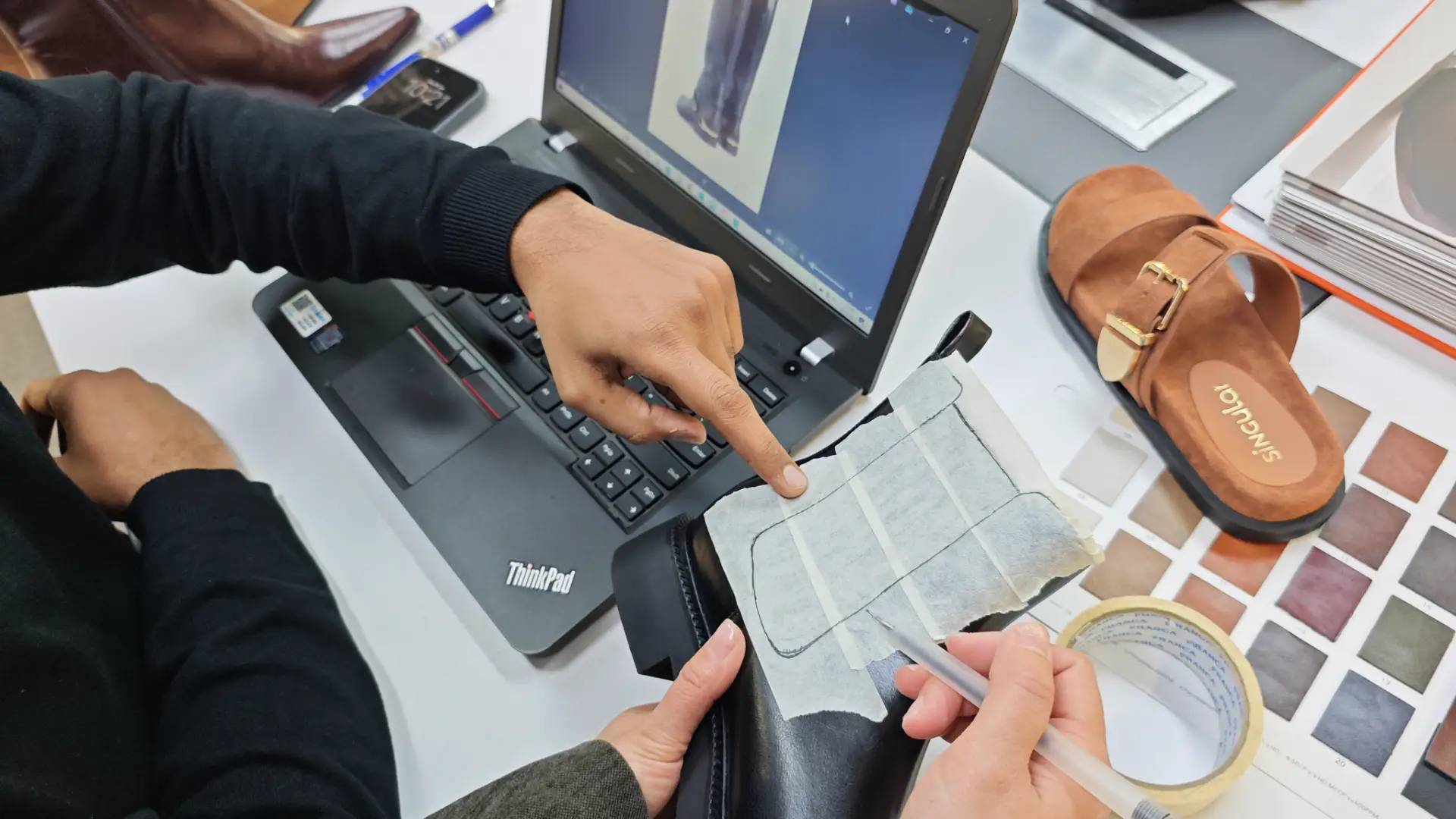
When a brand starts developing a new shoe, one of the first practical questions is usually: How much will the sample cost?
There is no single price that applies to every footwear project. A sample made with an existing last and outsole can involve very different work from a new style that needs a custom sole, special materials, or several rounds of pattern adjustment.
For that reason, it is more useful to look at footwear sampling as a development cost rather than simply the price of making one pair.
The sample fee is only one part of the picture. What matters is understanding what the supplier needs to develop, which items are included in the quotation, and what could create additional cost as the shoe moves toward approval.
How Much Does a Footwear Sample Cost?
There is no standard sample price for every type of shoe.
A straightforward style using an existing last, outsole, and readily available materials may involve mainly sample-making labor, materials, and some pattern adjustment. A more customized shoe may also require new tooling, special material sourcing, additional component development, or several rounds of refinement.
This is why a useful sampling budget starts with the product itself.
Before approving a sample fee, it is worth knowing whether the quotation covers only the physical sample or also includes development work such as pattern making, special material sourcing, customized components, or tooling.Two samples may both be described as “one pair,” but the work required to make them can be very different.
What Does a Shoe Sampling Cost Actually Cover?
The physical sample is the visible result, but there is usually more work behind it.
For a new footwear style, the development team may need to adjust patterns, prepare materials, select or modify components, work out the construction, and assemble the shoe outside the normal bulk-production flow.
The exact combination depends on the project. For example, if a brand is developing a women's loafer using an existing last and outsole, the main work may be concentrated on the upper pattern, material selection, and sample assembly. If the same design also requires a new outsole or a particular decorative component, the development work changes considerably.
This is why it is useful to separate the different parts of the cost rather than treating every sample as the same type of development job.
Sample Making
Sample making covers the practical work of producing the physical shoe.
A sample is normally made in a very small quantity, often by a development team rather than through the same production setup used for bulk manufacturing. Cutting, stitching, lasting, finishing, and other operations may need to be handled specifically for the development pair.
The resulting cost per pair can therefore be much higher than the eventual bulk manufacturing cost.
Pattern Development
The upper pattern is where a design starts becoming a manufacturable shoe.
A simple design based on an established construction may require only limited adjustment. A style with unusual panel shapes, multiple materials, special proportions, or more complicated construction may require more pattern work before the sample can be evaluated properly.
This is also an area where a sketch and a finished shoe can differ. Some proportions that look right on a drawing need to be adjusted once the upper is built around the last.
Materials and Components
Sample development often involves buying very small quantities of materials. That can create practical problems that do not occur in bulk production. A supplier may need to locate a particular color, finish, lining, hardware item, or upper material without knowing yet whether the style will go into production.
If the exact material is unavailable in a small quantity, an alternative may need to be tested first. In some cases, the material itself is not the expensive part; finding and preparing a usable quantity for development is what adds work.
Development Work
Some shoes need more technical development than others. The development team may need to determine how a particular detail should be constructed, adjust the relationship between different components, or find a practical way to reproduce a design feature without creating problems during production.
This kind of work is easy to overlook because it may not appear as a separate physical component on the finished sample. It is nevertheless part of what makes a design workable.
What Usually Makes One Shoe Sample More Expensive?
The biggest differences normally come from the amount of work required to develop the shoe. When developing a private label footwear collection, sampling costs can vary depending on the complexity of the shoe, materials, and development requirements.
Design Complexity
A simple women's flat may be relatively straightforward when it uses a familiar construction and existing components.
A fashion shoe with several upper materials, unusual stitching, decorative hardware, a special heel, or a complicated sole structure can require more development work.
However, visual complexity alone does not determine the cost. A shoe that looks complicated may use a proven construction, while a visually simple shoe can require substantial adjustment to achieve the right shape or fit.
Existing Components vs. Custom Components
Existing lasts, outsoles, heels, and other components can simplify development when they are suitable for the design.
That does not mean a brand should avoid customization. For some products, a distinctive sole or heel is an important part of the design and needs to be developed specifically for the collection.
The practical question is whether the component already exists and can work for the intended product, or whether it needs to be developed from scratch. When a new last, outsole, heel, or mold is required, the project may involve a separate tooling cost in addition to the sample-making cost.
Material Availability
Material choice can also affect the development budget.
Standard materials that are already available are usually easier to prepare for sampling. Special colors, finishes, imported materials, or unusual hardware can require additional sourcing work.
This becomes particularly relevant for fashion footwear, where the appearance of a specific material or finish may be an important part of the product concept.
Number of Revisions
The first sample is not always expected to be the final version. A revision may be needed because the proportions are not right, the material does not behave as expected, a construction detail needs to change, or the brand wants to adjust the appearance after seeing the physical shoe.
That is normal. The unnecessary cost usually comes from revisions that could have been avoided through clearer information or more organized feedback. When several people provide different comments at different times, the development team may end up making changes that later need to be changed again.
Good sampling is therefore not about eliminating revisions. It is about making each revision solve a specific problem.
Sample Cost, Development Cost, and Tooling Cost Are Not the Same
These terms are sometimes mixed together in supplier quotations, but they can represent different types of work.
Sample cost is generally the cost of making the physical sample, including the relevant labor and materials.
Development cost covers the technical work needed to turn the design into a workable product. Depending on the project, this may include pattern development, construction adjustments, fitting work, or other technical preparation.
Tooling cost relates to customized production components such as a new last, outsole mold, heel, or other specially made tooling.
A supplier may combine some of these charges, while another may list them separately. Neither format is necessarily a problem. The important thing is that the brand understands what it is paying for before development starts.
Why Is a Shoe Sample Often More Expensive Than the Bulk Unit Cost?
This is one of the most common misunderstandings when a brand starts working with a footwear manufacturer.
Bulk production is built around repetition. Materials are purchased in larger quantities, production operations are standardized, and the same construction is repeated across many pairs.
A sample does not have those advantages. One pair may require small-quantity material sourcing, manual preparation, pattern adjustments, development work, and individual finishing. Some of these activities would disappear or become much more efficient once the shoe enters regular production.
So the sample cost should not be used as a direct estimate of the future bulk unit price.
The two figures answer different questions:
The sample cost tells you what it takes to develop and make the shoe at this stage.
The bulk price tells you what it costs to manufacture the approved product at production volume.
Keeping those two stages separate makes the development budget much easier to understand.
A Practical Example: Why Two Sample Projects Can Cost Very Different Amounts
Consider two women's loafers.
The first uses an existing last and outsole. The upper is made from a material that the supplier already handles regularly, and the construction is relatively straightforward. The development work is mainly pattern adjustment, material preparation, sample making, and minor refinement.
The second loafer has a different sole shape, a customized heel detail, a specific upper finish, and several decorative components. The supplier needs to work on new components, source materials in small quantities, and spend more time adjusting the construction.
Both projects may start with a request for “one sample.” But the development work behind them is not comparable.
This is why a sample fee makes more sense when it is considered alongside the work included in the development rather than judged only as a price per pair.
For a brand, this distinction is particularly useful when planning a new collection with several styles. Some shoes may be relatively simple adaptations, while others may require much more original development.
Does a Sample Fee Include Tooling?
Not necessarily. If a design uses an existing last, outsole, heel, or other suitable component, no new tooling may be required.
When a completely new component is needed, however, the supplier may need to develop a last, outsole mold, heel, or another specialized tool before the sample can be completed.
That cost may be quoted separately from the sample-making fee. This is one of the first things worth clarifying when a new footwear style includes a customized sole or heel. A low sample fee can look attractive at first, but it does not tell you the complete development requirement if tooling is outside the quotation.
Can the Sample Fee Be Deducted From the Bulk Order?
This depends on the supplier's commercial policy.
Some manufacturers credit part or all of the sample or development fee against a confirmed production order. Others treat sample development as a separate service.
There is no universal rule, so this should be confirmed before the sample is made.
It is also worth checking what triggers the credit. For example, the policy may depend on confirming a bulk order within a certain period or meeting a specified production quantity.
The important thing is to understand the arrangement before treating a sample fee as either a refundable deposit or a final development expense.
How Can Brands Control Unnecessary Sampling Costs?
The goal should not be to find the cheapest possible sample. A very low sample fee does not help if the development work is incomplete and the project then requires several avoidable rounds.
A better starting point is a clear product brief. A tech pack, reference shoe, drawings, material information, measurements, and other available specifications give the development team a more reliable starting point. Not every project will have all of this information, particularly at the early concept stage, but unclear requirements should be identified before sampling begins.
Feedback also matters. If several people are involved in product development, it is better to consolidate their comments before sending them back to the supplier. Otherwise, one change can conflict with another and create another round of sampling.
Existing components can also be useful when they genuinely suit the product. A brand may still need a customized sole or heel for its final design, but not every component needs to be newly developed simply because the shoe is a new style.
The objective is to spend development time where it changes the product in a meaningful way.
For a detailed explanation of the stages from the first sample through confirmation and pre-production, see our guide to the shoe sampling process.
What Should You Confirm Before Starting a Sampling Project?
Before approving a sample quotation, it is useful to clarify a few points with the supplier:
· What does the sample fee include?
· Is pattern or technical development included?
· Are special materials and components included?
· Is new tooling charged separately?
· How are additional sample rounds handled?
· Can the sample or development fee be credited against a confirmed bulk order?
These questions are specifically about the development stage. They are not the same as comparing production quotations or calculating the total landed cost of a finished order.
That distinction matters when discussing footwear costs because each stage of the project has a different cost structure.
FAQ
Q: How much does a shoe sample cost?
A: There is no standard price for every footwear sample. The cost depends on the design, materials, components, pattern work, tooling requirements, and the amount of development involved.
Q: What is normally included in footwear sampling cost?
A: It may include sample-making labor, materials, pattern development, and other technical work required to produce the sample. Tooling and special components may be charged separately, depending on the project and supplier.
Q: Why is my shoe sample more expensive than the bulk shoe price?
A: A sample is developed in a very small quantity and may involve manual work, small-quantity material sourcing, pattern adjustments, and technical development. Bulk production benefits from volume and repeated manufacturing operations, so its unit cost is calculated differently.
Q: Does footwear sampling cost include tooling?
A: Not always. If the design requires a new last, outsole mold, heel, or other customized component, tooling may be quoted separately.
Q: Can a sample fee be deducted from the final order?
A: Some suppliers offer a credit against a confirmed bulk order, while others do not. The terms should be confirmed before development begins.
Q: How can I avoid unnecessary sample costs?
A: Clear product information, consolidated feedback, and early discussion of technical issues can reduce avoidable revisions. Using existing components where they genuinely fit the design can also reduce unnecessary development work.
Final Thoughts
Footwear sampling is where a design starts to prove whether it can work as a real product. The cost is therefore not just the price of making one pair. It can include pattern work, materials, components, technical development, tooling, and the adjustments needed to turn the first idea into a workable shoe.
For brands developing a new style, the most useful question is not simply whether the sample fee is high or low. It is what work is behind that fee, and what does the development need to accomplish before the shoe is ready for production?
That conversation gives both the brand and the footwear supplier a clearer basis for planning the project.
At SINGULAR, our development team works with brands on footwear design review, material selection, sample development, production coordination, and quality control. We can review a design, tech pack, or reference sample at the beginning of a project and identify the main development requirements before sampling starts.
If you are developing a new footwear style, sharing the available product information early can make it easier to determine what needs to be developed, what can be adapted from existing components, and where the main sampling costs are likely to come from.