
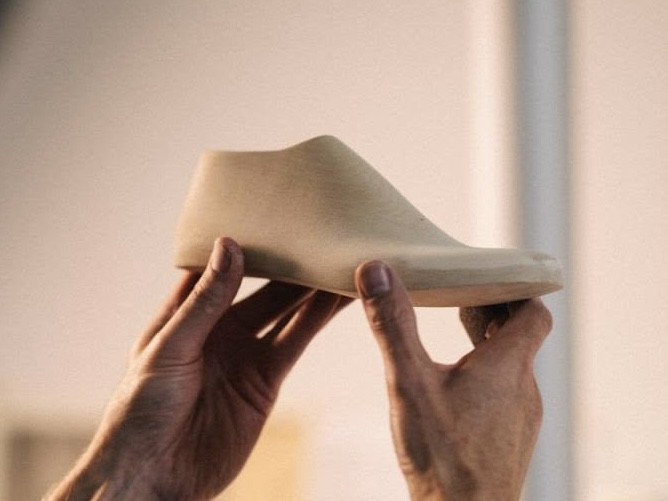
For a footwear brand, quality problems rarely begin at the final inspection.
A loose outsole, uneven stitching, inconsistent color, poor fitting, or a difference in shape between production pairs may only become visible at the end of production. In many cases, however, the cause appeared much earlier — during material selection, sample development, production preparation, or communication with the supplier.
That is why footwear quality control should be viewed as a process rather than a single inspection.
A reliable QC system starts before mass production and continues through product development, sample approval, production preparation, manufacturing, inspection, and shipment. For brands working with overseas footwear manufacturers, managing these stages properly can help prevent problems instead of dealing with them after the order is already finished.
Quick Answer: What Is Footwear Quality Control?
Footwear quality control is the process of preventing, monitoring, and identifying quality problems throughout shoe development and production. For footwear brands, QC should begin before mass production and continue through sampling, production preparation, manufacturing, inspection, and shipment.
The purpose is not simply to find defective shoes before they leave the factory. A good QC process helps ensure that the supplier understands the approved product, uses the right materials and components, produces the shoes consistently, and addresses recurring problems while there is still time to correct them.
Why Does Footwear QC Need to Start Before Mass Production?
A finished shoe is the result of many materials, components, and production processes working together. The upper, lining, outsole, heel, insole, reinforcement, adhesive, hardware, stitching, and finishing can all affect the final result.
A material can look right on a development sample but behave differently when a larger production batch is prepared. An outsole can match the approved sample visually but require different production adjustments because of material or molding variation. A construction method that works well on a small number of samples may also need to be controlled more carefully when it is repeated across a larger order.
These are not always signs of poor workmanship. They are normal production variables that need to be understood and managed.
For a footwear brand, the consequences can extend beyond the product itself. Quality problems may lead to rework, production delays, additional costs, customer complaints, or returns. The earlier a potential problem is identified, the more options the supplier and brand usually have to deal with it.
1. Define the Product Standard Before Production
Quality control needs a clear reference. Before production starts, the brand and supplier should have a shared understanding of the product. Depending on the project, this may cover materials, colors, construction, dimensions, components, finishing, branding, packaging, and other requirements.
A reference image may be enough for some simple styles, but more complicated footwear often requires clearer technical information. A footwear tech pack can help communicate the intended materials, measurements, construction details, and finishing requirements.
This becomes particularly useful when the supplier is working from information provided remotely. A buyer may understand a design detail one way while the production team interprets it differently. If that difference is not resolved during development, a final inspection may identify the result as a problem without being able to explain how the misunderstanding happened.
Good QC therefore starts with making the product itself clear.
2. Make the Approved Sample a Practical Production Reference
Once a development sample has been reviewed and approved, it becomes one of the most important references for bulk production. The purpose is not to make every production pair physically identical to one sample down to the smallest detail. Materials naturally have some variation, and production involves repeated processes rather than the controlled conditions of sample development.
What matters is that the production team has a clear standard for the product it is expected to reproduce. The reference may include the overall shape, material and color, construction, components, branding details, finishing, fitting, key measurements, and packaging requirements.
Changes after approval need the same level of control. For example, if a buyer changes a material color or component after the sample has been approved, the updated requirement needs to reach the people responsible for production. If different teams are working from different versions of the product information, inconsistencies can appear even when everyone is following the instructions they received.
Keeping the approved sample and production information aligned is a simple part of QC, but it can prevent unnecessary confusion later.
3. Control Materials and Production Risks Early
Materials are one of the areas where problems can develop before a finished shoe exists. Differences in color, texture, thickness, surface finish, flexibility, or material behavior can affect how the shoe looks and performs during production. The same applies to components such as outsoles, heels, buckles, trims, insoles, labels, and packaging.
Consider a synthetic upper as an example. One production batch may have a slightly different surface finish or stiffness from the material used during development. That difference can affect how the upper is shaped and finished during assembly.
The earlier the supplier notices a material issue, the more practical the response can be. The team may be able to confirm the material, adjust the production process, or discuss an alternative before the issue affects a large quantity of shoes. This is one reason footwear development and production experience matters when evaluating a supplier. A supplier that understands how particular materials and constructions behave in production can often identify risks before they become large-scale quality problems.
4. Monitor Quality While Production Is Running
Quality control becomes particularly useful once production starts. If a problem appears in the first part of an order and nobody notices it, the same issue can continue through a much larger quantity of shoes. By the time it is discovered during final inspection, the production line may already have completed the order.
Inline QC gives the production team an opportunity to identify this type of problem earlier. The focus is not simply on finding defective pairs. When a recurring issue appears, the team should look at what is causing it and whether the production process needs to be adjusted.
For example, if a construction detail repeatedly affects the shape of the shoe, repairing the affected pairs alone does not solve the production problem. The more useful response is to understand why the variation is occurring and correct the process before more pairs are made.
The exact control points depend on the shoe construction and the requirements of the product. What matters is that quality is being monitored while there is still time to act.
5. Keep Bulk Production Consistent With the Approved Sample
One of the most common concerns in footwear development is simple:“The sample looked good, but the bulk production is different. Why?”
There is rarely one single reason. A development sample may receive a high level of attention from an experienced sample maker. Bulk production involves different workers, production speeds, material batches, equipment, and repeated processes. Small changes in any of these areas can affect the final result. A sample may also be developed using carefully selected materials or components, while bulk production has to work with production quantities and actual supplier batches.
The important part is not expecting production to happen under exactly the same conditions as sample development. It is making sure the approved product can be reproduced under normal production conditions. That requires a controlled production reference, clear communication, suitable materials and components, and monitoring during manufacturing.
This is also why sample approval should be more than a simple “approved” message. The production team needs to understand what has actually been approved and what standard the bulk order is expected to follow.
For a more detailed discussion of sample-to-bulk differences, see Why Does Mass Production Differ From the Approved Sample.
6. Agree on What “Acceptable Quality” Means
Quality problems can also arise when the buyer and supplier have different expectations. A buyer may consider a particular cosmetic variation unacceptable, while the supplier may regard it as a normal variation associated with the material or production process.
Simply asking a supplier to “make better quality shoes” leaves too much room for interpretation.
Before production begins, both sides should have a reasonable understanding of what the finished product needs to meet. Depending on the project, this can be based on the approved sample, technical specifications, material requirements, measurements, packaging requirements, defect classifications, inspection procedures, and applicable testing or compliance requirements.
For larger or more standardized programs, buyers and suppliers may also agree on a formal inspection standard or use an AQL-based inspection process. The purpose is not to create unnecessary rules. It is to give both sides a common reference when production variation occurs.
7. Evaluate the Supplier's QC Capability, Not Just Its QC Department
When comparing footwear manufacturers, a more useful conversation is about how quality is actually managed.
Ask how the approved sample is controlled. Can the production team identify the current approved version and its specifications?
Ask how incoming materials and components are handled. Are potential differences identified before they enter bulk production?
Ask what happens when a recurring problem is found during manufacturing. Is the affected footwear simply repaired, or does the team investigate the production cause?
And ask what happens after the problem has been corrected. Is there a process for preventing the same issue from appearing again?
These questions help reveal whether a supplier has a repeatable quality-control process or simply performs an inspection at the end of production. For a footwear brand, that distinction can be important when choosing a long-term manufacturing partner.
Footwear Quality Control vs. Shoe Quality Inspection Checklist
Footwear quality control and a shoe inspection checklist are related, but they serve different purposes.
Footwear quality control is the broader system used to manage product quality throughout development and manufacturing.
A shoe quality inspection checklist is a practical tool used to verify specific requirements at a particular inspection stage.
In simple terms:
Quality control asks: “How do we keep the product under control throughout the project?”
An inspection checklist asks: “What exactly should we check?”
Both have a place in footwear manufacturing.
If you need detailed inspection points for finished shoes, see our Shoe Quality Inspection Checklist for Footwear Brands.
That article focuses on the practical checks buyers can use when inspecting footwear. This article is intentionally focused on the wider QC process, production control, and supplier evaluation.
What Should Brands Look for in a Footwear Manufacturer?
A capable footwear manufacturing partner should be able to connect development, sampling, production, and quality management. These activities are closely related:
A material decision made during development can affect production.
A construction detail identified during sampling can affect bulk manufacturing.
A change made after approval can create quality problems if it does not reach the production team clearly.
For OEM/ODM footwear projects, keeping these functions connected can make communication and problem-solving more efficient. This is also where a supplier's development and production experience becomes relevant. A supplier does not add value only by making the finished shoes. It can also contribute by identifying practical production risks before they become expensive problems.
At SINGULAR, our footwear OEM/ODM service connects product development, sampling, manufacturing coordination, and quality management. For brands developing new footwear collections, this allows quality considerations to be discussed as part of the product development process rather than treated as a separate task at the end.
A Practical Footwear QC Workflow
For most footwear projects, quality control can be viewed as a continuous process: Product Requirements → Development → Sample Approval → Production Preparation → Inline QC → Final Inspection → Shipment → Review
Each stage has a different purpose:
During product development, the focus is on whether the product can be made as intended.
During sample approval, the brand and supplier establish the production reference.
Before mass production, materials, components, specifications, and production requirements need to be aligned.
During production, inline QC helps identify problems while the order is still being made.
Before shipment, final inspection provides a last opportunity to verify that the finished order meets the agreed requirements.
After a quality issue occurs, reviewing the cause can help prevent the same problem from recurring in future production. A useful QC system should create more than a list of defective pairs. It should also provide information that helps improve the next production run.
Final Takeaway: Good Footwear QC Starts Before You Inspect the Shoes
For footwear brands, quality control is not simply about finding defective shoes before shipment. It is about making the approved product repeatable and keeping potential problems under control as the project moves from development to production. That requires clear product requirements, controlled samples and materials, communication between development and production, monitoring during manufacturing, and a final inspection before shipment.
When choosing a footwear manufacturer, it is therefore worth looking beyond the supplier's final inspection capability. A reliable manufacturing partner should be able to explain how it understands the approved product, manages production risks, monitors quality, and responds when something goes wrong. That kind of process can help both the brand and supplier avoid unnecessary rework, delays, and misunderstandings.
If you are developing a new footwear collection or looking for an OEM/ODM manufacturing partner, SINGULAR can discuss your product requirements, expected production quantity, development needs, and quality expectations with you.
Discuss Your Footwear Project with SINGULAR →
Frequently Asked Questions About Footwear Quality Control
Q: What is footwear quality control?
A: Footwear quality control is the process of preventing, monitoring, and identifying quality problems throughout shoe development and manufacturing. It can include product specifications, sample approval, material control, production monitoring, inline QC, and final inspection.
Q: When should quality control start in footwear manufacturing?
A: Quality control should start before mass production. Product requirements, materials, construction, samples, and production references should be reviewed before bulk manufacturing begins. Early control gives both the supplier and brand more opportunities to address potential problems before they affect the finished order.
Q: What is the difference between footwear quality control and inspection?
A: Quality control is the broader process used to manage product quality throughout development and manufacturing. Inspection is a specific activity used to check whether a product meets defined requirements at a particular stage. Inspection is therefore one part of a complete QC system.
Q: How can a brand evaluate a footwear supplier's quality-control capability?
A: Instead of only asking whether a supplier has a QC department, ask how it manages approved samples, materials, production monitoring, recurring defects, corrective action, and final inspection. The supplier's actual process can provide a better indication of its quality capability.
Q: Why can mass-produced shoes differ from the approved sample?
A: Differences can result from material batches, production conditions, worker methods, equipment, process variation, or changes made after sample approval. A clear production reference, controlled materials, good communication, and production monitoring can help reduce the difference between the approved sample and bulk production.